Retraining the Brain for Chronic Pain - the Mindbody Approach
Go beyond Dr. Sarno's foundational mind-body insights with an advanced neural retraining method designed to offer deeper, lasting healing by rewiring your nervous system and addressing the root causes of chronic pain.

“The pain in my lower back has definitely diminished. It’s not the sharp pain that it was before, now it is mainly weakness. I don’t have that pain in the morning which is wonderful." - Alicia
Chronic pain is one of the most misunderstood and frustrating health challenges of our time. Millions of people live with persistent pain—migraines, back pain, joint pain, fibromyalgia, pelvic pain, abdominal pain, nerve pain—despite normal imaging, “successful” surgeries, or years of diligent medical treatment. When pain does not respond to physical interventions alone, it can leave people feeling hopeless, broken, or resigned to a lifetime of suffering.
Yet for decades, there has been compelling evidence that chronic pain is not purely a structural or mechanical problem. It is a brain-based pattern—one that is deeply intertwined with emotional stress, nervous system dysregulation, and subconscious programming.
Dr. John Sarno and the Mind-Body Breakthrough
One of the earliest Western-trained physicians to articulate this was Dr. John Sarno, a rehabilitation specialist at NYU Medical Center. Dr. Sarno introduced the concept of Tension Myositis Syndrome (TMS), proposing that chronic pain was often the result of unconscious emotional stress rather than physical injury.
According to Sarno, the brain creates pain as a protective mechanism—diverting attention away from emotions that feel threatening, unacceptable, or overwhelming.
He observed that pain frequently appeared during periods of emotional strain: caregiving, work pressure, relationship conflict, grief, or major life transitions.
Importantly, Sarno emphasized that the pain was real—caused by physiological changes initiated by the brain, not imagined or “all in your head.”
While Sarno’s work helped tens of thousands of people rethink pain, modern neural retraining methods have taken these ideas much further, offering practical ways to work directly with the subconscious mind where pain patterns are generated and maintained.
Pain Lives in the Brain—Not Just the Body
All pain, whether acute or chronic, is processed by the brain. Even when there is a physical injury, pain is an interpretation—not a direct readout of tissue damage. This is why two people with the same injury can experience vastly different levels of pain, and why pain can persist long after tissues have healed.
The brain regions that process physical pain overlap significantly with those that process emotional pain. In other words, emotional distress and physical pain are not separate systems. They are deeply connected. When emotional pain is suppressed, ignored, or deemed unacceptable, it doesn’t disappear—it often finds expression through the body.
This is especially relevant for chronic pain, which by definition has outlived its usefulness as a warning signal. Chronic pain is a learned neural pattern, reinforced over time by stress, fear, hyper-vigilance, and unresolved emotional experiences.
Gender, Roles, and Pain Patterns
Pain patterns often reflect the roles people are conditioned to play. Women, for example, frequently carry pain related to over-responsibility, perfectionism, caregiving burdens, and the pressure to meet everyone else’s needs while denying their own.
Many women act as the “shock absorbers” of families and workplaces, absorbing emotional stress while continuing to perform. Over time, this constant self-suppression can manifest as migraines, pelvic pain, autoimmune conditions, fatigue, or widespread pain syndromes.
Men, on the other hand, are often socialized to suppress vulnerability, grief, and fear. They receive conflicting messages: master your emotions, but be aggressive; be successful, but don’t appear weak; feel deeply, but don’t show it.
These internal conflicts frequently lead to buried anger, unexpressed grief, and emotional disconnection—states that place enormous strain on the nervous system. Chronic back pain, joint pain, abdominal pain, and foot or leg pain are common expressions of this internalized stress.
In both cases, pain becomes the body’s voice when emotions have been silenced.
Why Conscious Insight Isn’t Enough
Many people understand, at least intellectually, that stress affects their symptoms. Yet knowing this rarely leads to lasting relief. That’s because the patterns driving chronic pain are not held in the conscious mind.
The conscious mind accounts for roughly 10% of brain activity. The subconscious mind—where pain associations, emotional memories, and survival responses live—accounts for the remaining 90%. It is associative, emotional, and non-linear. Trying to reason your way out of chronic pain using logic or positive thinking is often futile.
This is where advanced neural retraining comes in.
Working Directly with the Subconscious
Modern neural retraining methods allow us to access the subconscious safely and systematically. Rather than diagnosing or treating symptoms, the process creates a receptive, meditative state in which the subconscious can reveal the emotional and mental patterns linked to pain.
Clients often experience insights they could not have arrived at consciously—connections between pain and childhood experiences, relationship dynamics, internalized beliefs, or long-standing emotional conflicts.
These insights are not forced or suggested; they emerge naturally when the subconscious is invited to participate.
As emotional charge is neutralized and stress patterns are resolved, the nervous system begins to recalibrate. Pain may lessen during a session, shift locations, or temporarily disappear. While a single session can be powerful, lasting change typically occurs over multiple sessions as layers of conditioning are addressed.
Pain as a Messenger, Not an Enemy
One of the most transformative shifts for people with chronic pain is reframing pain as information rather than pathology. Pain is not a punishment. It is not a personal failure. It is often the nervous system signaling that it has been operating under unsustainable conditions for too long.
By working at the subconscious level, we are not erasing memories or forcing positive emotions. We are helping the brain update outdated survival responses—responses that once made sense, but no longer serve the person’s health or life.
When emotional burdens are released, the brain no longer needs to produce pain as a distraction or defense. The body can return to regulation, and healing becomes possible.
A New Way Forward
Retraining the brain for chronic pain is not a miracle cure, but it is a profound shift in approach. It honors the intelligence of the body, the complexity of the nervous system, and the lived emotional experiences that shape our health.
If you have tried everything and still feel stuck, working with the subconscious may be the missing piece—not because your pain isn’t real, but because it is.
When we change the patterns in the brain, we open the door for the body to heal.
Learn More
- Watch: How Do We Retrain the Brain for Chronic Pain?
- Read: How Do We Retrain the Brain for Physical Symptoms?
- Listen to our podcast episodes on chronic pain
- Listen to client stories about the MAP Method on our podcast.
- Check out our free courses on the MAP Method.



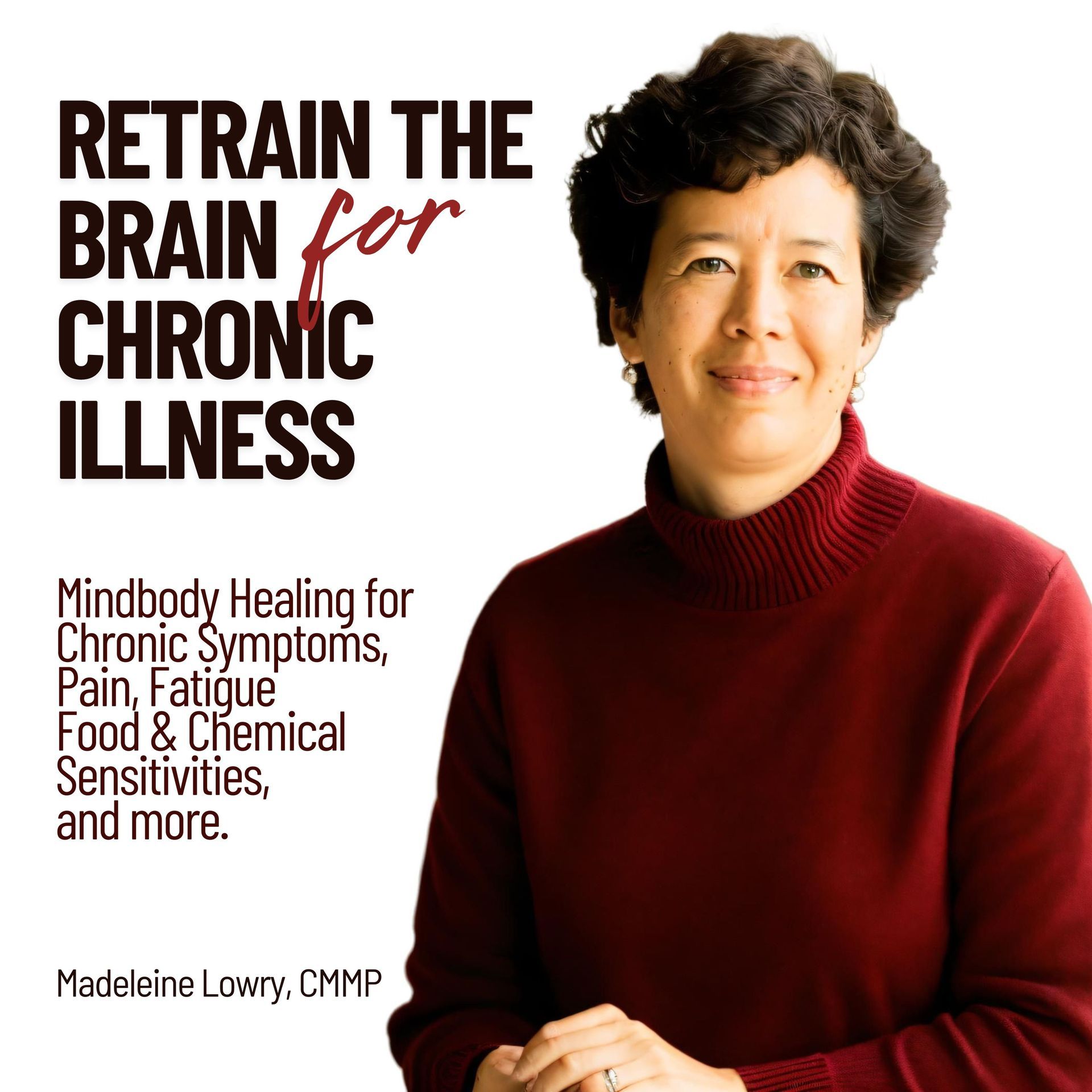
Madeleine Lowry, NTP, CMMP
Certfied MAP Method Practitioner
Madeleine specializes in neural retraining for chronic conditions. As a Nutritional Therapy Practitioner, she worked with many clients who were interested in eliminating allergies, sensitivities and intolerances. After learning a basic method and seeing its limitations, she trained in an advanced method of retraining the brain and now offers MAP sessions over Zoom and online self-paced programs for Anxiety/Depression, Sensitivities, Chronic Pain, Self-Healing, and COVID Long.
Related Posts